
Article: Can You Walk All Day in Ballet Flats? What Makes a Ballet Flat Comfortable for Walking
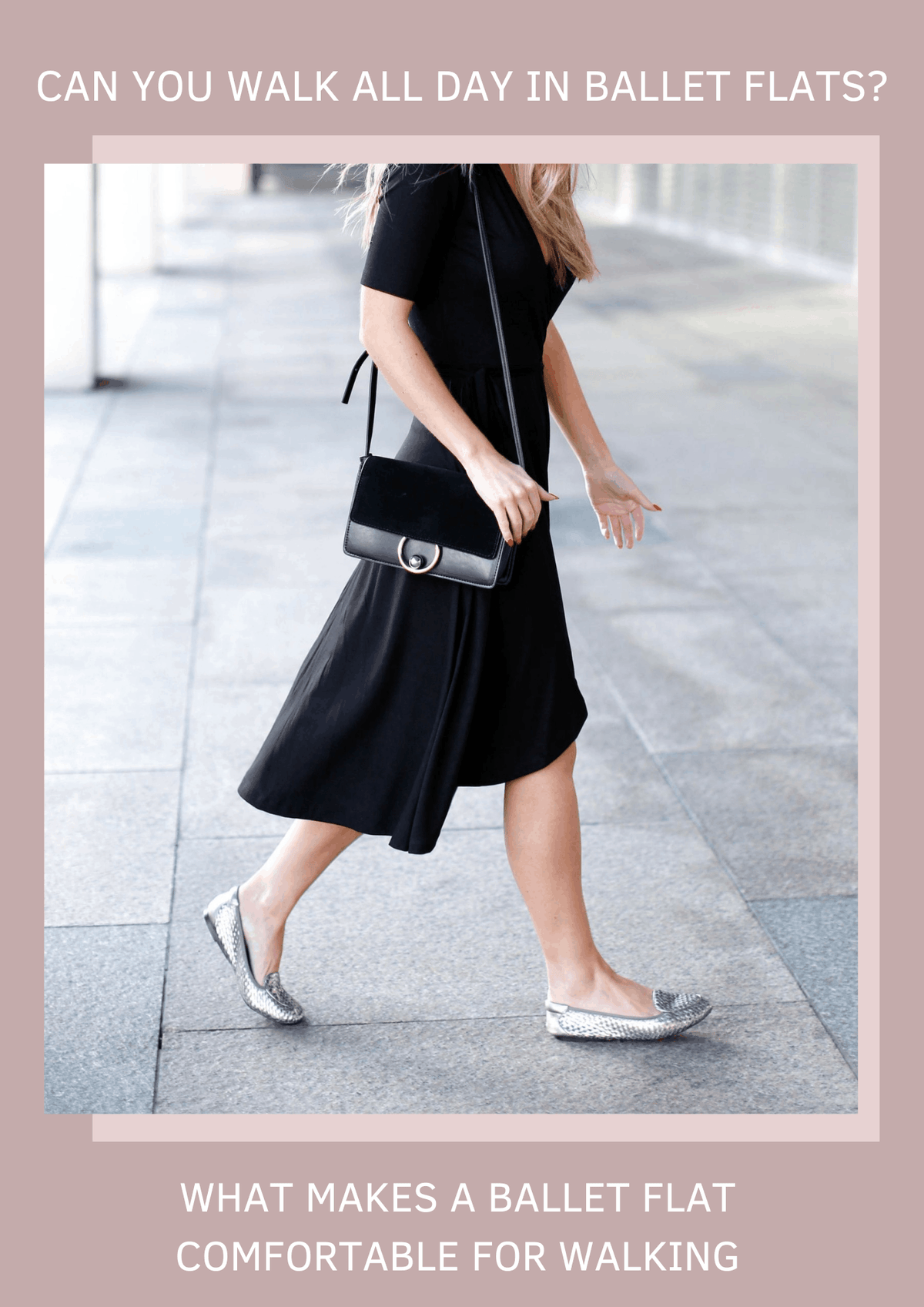
Can You Walk All Day in Ballet Flats? What Makes a Ballet Flat Comfortable for Walking
There is a very simple way to test whether a pair of ballet flats is genuinely comfortable: don't ask yourself how they feel when you put them on. Ask yourself how they feel six hours later.
That is the test I have always been interested in.
A shoe can feel perfectly comfortable when you first slip your feet into it. Stand in front of the mirror and it looks beautiful. Take a few steps around the room and everything seems fine. But what happens when you've walked to the station, crossed town, stood through a meeting, climbed a few flights of stairs and still have another few hours ahead of you?
That is where the difference between a ballet flat that is simply comfortable when you first put it on and one that remains comfortable as the hours pass begins to reveal itself.
I've spent nearly twenty years designing, wearing and testing ballet flats, and I've learnt that comfort isn't a single feature. It is the cumulative effect of hundreds of small decisions about the way a shoe fits, flexes, cushions and moves with the foot.
And because I design and test our shoes myself, I don't think our customers should have to discover what happens after six hours. That's my job.
Can You Really Walk All Day in Ballet Flats?
Yes, you can. But not every ballet flat will offer the same experience when you're wearing it for an entire day.
There is a tendency to think of ballet flats as inherently delicate shoes: beautiful perhaps, but something you wear when you don't expect to walk very far. I have never really agreed with that distinction. A ballet flat is simply a particular type of shoe. How comfortable it is for walking depends on how it has been constructed, how it fits and how it behaves once you start moving.
There is actually some interesting research specifically looking at this question. A 2014 study published in The Foot asked 27 women to assess three different ballet pump designs while walking along a 20 metre walkway. The researchers measured both the physical characteristics of the shoes and the progression of the centre of pressure during walking. Of the three designs tested, the participants perceived a snug fitting, flexible soled round ballet pump as the most comfortable and it was associated with a faster, more efficient gait.
The study is relatively small, so I wouldn't suggest that it proves one particular ballet flat shape is universally more comfortable than another. The important finding is about the combination of shape, fit and flexibility in that particular group of shoes.
What I find interesting is that the researchers were looking at something we sometimes overlook when choosing shoes: how the shoe behaves while you are actually walking in it.
That is very close to the way I think about footwear. There isn't one feature that makes a shoe comfortable. It is the relationship between all of them.
And that relationship becomes much more important when you're asking a shoe to carry you through an entire day.
What Makes a Ballet Flat Comfortable for Walking?
A comfortable walking ballet flat starts with fit, but it doesn't end there.
The shoe needs to sit securely on the foot without gripping it too tightly. It needs enough flexibility to move naturally as you walk, while still offering the structure and cushioning you need. The materials need to feel good against the skin, and the areas that are particularly vulnerable to pressure need to have been considered during construction.
This is why I have always been interested in what happens between the obvious features of a shoe.
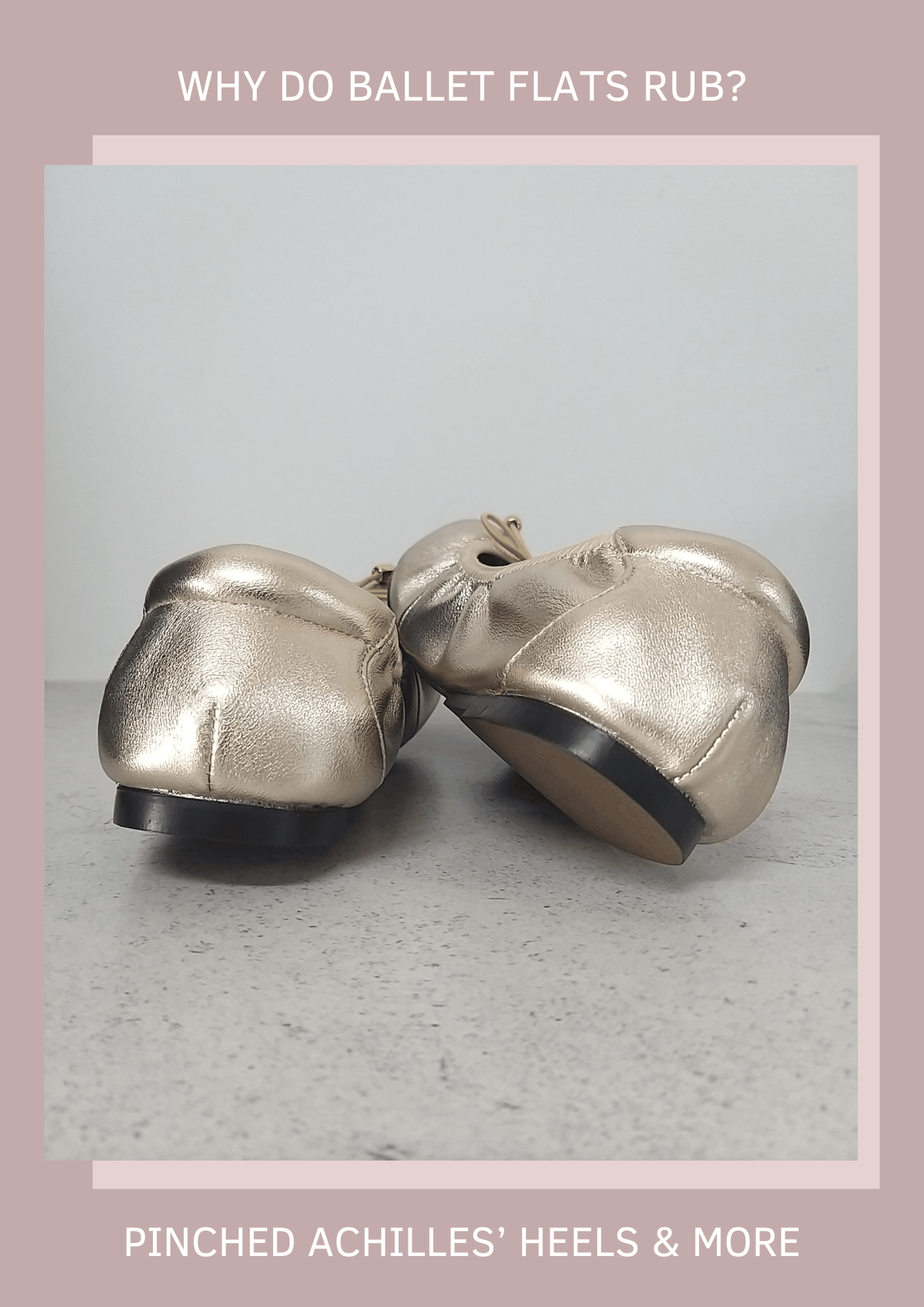
Take the topline, for example. It isn't simply there to make the ballet flat look pretty. It needs to hold the shoe in place without digging into the foot. The back of the shoe needs to accommodate the Achilles rather than creating a hard point of pressure. The sole needs to move with the foot rather than fighting against it.
I've written more about what can happen when these details aren't quite right in Why Do Ballet Flats Rub? How to Stop Heels Rubbing, including why the Achilles and topline can be such sensitive areas of a ballet flat.
These are not particularly glamorous things to talk about when you're designing a collection. They don't necessarily show up in a photograph. Yet they can determine whether you happily wear a pair of ballet flats for eight hours or take them off after forty minutes.
Our customers tell us about these real-life experiences all the time. One customer described her Cocorose ballet flats as "stylish, elegant, comfortable" and specifically praised being able to "walk for long periods without my feet hurting" which is, as she said, "basically all I want from shoes". That is the kind of feedback I find most useful because it describes the shoe in the context that really matters: life.
Does a Ballet Flat Need to Be Flexible to Be Comfortable?
I believe flexibility is incredibly important, but flexibility on its own isn't the answer.
This is one of the reasons I deliberately deconstructed the traditional ballet flat when I developed the original foldable shoe. I needed to rethink the construction in order to make the shoe fold, but I also wanted to remove the harsh rigidity that had made so many traditional ballet flats uncomfortable for me.
The two things became inseparable.
A foot moves as you walk. The shoe needs to accommodate that movement while still providing enough structure to protect and support the foot. That doesn't mean creating a completely unstructured shoe. It means being much more deliberate about where structure is useful and where flexibility allows the shoe to work more naturally.
That thinking is still at the heart of our ballet flats today.
The research into ballet pumps is interesting here because the study I mentioned earlier found that the flexible soled design was perceived as the most comfortable of the three shoes tested. Again, I wouldn't turn a small study into a universal rule, but it certainly supports something I've experienced through years of testing: the way a shoe bends and moves under the foot matters.
This is where the story of our foldable shoes becomes relevant. The same constructional thinking that allowed me to engineer foldability gave me the freedom to rethink how the ballet flat could behave on the foot. I wasn't simply making a ballet flat that folded; I was rethinking what a ballet flat could be. I explore that journey in The Everyday Shoe That Folds.
Are Flat Shoes Actually Good for Walking?
"Flat" is an interesting word because it tells you surprisingly little about what it actually feels like to walk in a shoe.
Two shoes can both look completely flat from the outside and feel entirely different underneath your feet. One may be rigid, unforgiving and disconnected from the way your foot moves. Another may be flexible, cushioned and carefully shaped to work with your stride.
So I don't think the useful question is simply whether flat shoes are good or bad for walking.
The better question is: how has the individual shoe been designed?
A ballet flat can have a flexible sole, cushioning, structure and support while still maintaining the elegant low profile that makes it a ballet flat. It doesn't need to resemble an athletic shoe to be comfortable for everyday walking.
This is also why I am wary of blanket statements about footwear. Comfort is highly individual. Research into footwear comfort shows that it depends on a combination of footwear design, the task being performed and individual anatomical and physiological differences. The influence of factors such as sole flexibility and shoe microclimate is also not straightforward and can vary according to the circumstances.
That makes sense to me.
The right shoe for a gentle walk around a city is not necessarily the right choice for running a marathon. And a shoe that works beautifully for someone who spends most of her day sitting may not be the right choice for someone who spends eight hours standing at work.
Comfort has to be considered in context.
What Happens to Your Feet When You Walk All Day?
Walking is a wonderfully simple activity, but there is an enormous amount happening inside the foot with every step.
Your feet absorb and redistribute load repeatedly. They move through different positions as you walk, and the interaction between your skin, your footwear and the ground changes continuously.
Then there is the fact that your feet themselves change during the day.
Foot volume can increase under certain conditions, including prolonged periods of standing or sitting. Research using MRI and 3D volumetry has found measurable changes in foot volume during the day under study conditions.
This matters when you're choosing a shoe for all day wear because the foot inside your ballet flat at 5pm may not be quite the same foot that slipped into it at 8am.
That is one reason I don't think comfort can sensibly be judged by standing in a shoe for five minutes.
There is also a fascinating relationship between comfort and how far we are prepared to walk. I explored this in more detail in Why Comfortable Shoes Make You Walk Further, because when your feet aren't demanding your attention, walking stops feeling like something you have to endure and simply becomes part of the day.
Can You Wear Ballet Flats to Work All Day?
This is where the phrase "all day" becomes particularly interesting because no two working days look the same.
One woman might walk to the station, take a train into London, spend most of the day at her desk and then go out for dinner afterwards. Another might spend much of her working day on her feet. Someone else might be moving between classrooms, hospital wards, meetings or appointments.
One of the things I love most about Cocorose is seeing just how varied the women who wear our shoes actually are. Over the years, our customers have included nurses, doctors, teachers, judges, café owners, retail workers and business owners, alongside women working in offices, travelling, caring for families or enjoying retirement. Their lives are completely different, and yet they come back to us because the shoes have become something they can rely on.
That tells me something important. Comfort isn't about designing for one particular kind of working day. It's about creating shoes that can fit into many different kinds of lives.
Customers such as Yvonne have written in to let us know their Cocorose ballerinas are "comfortable to wear all day long" and the foldability is so practical for travelling and unexpected night club outings.
That kind of feedback is incredibly valuable because it tells me that a pair of ballet flats can be doing much more than simply looking good with an outfit. They can be trusted to carry a woman through an unexpectedly long or demanding day.
Can You Wear Ballet Flats for Long Days Out?
Absolutely, provided the shoe is comfortable for the kind of walking you are actually going to do.
This is where the difference between an occasional ballet flat and a genuinely wearable everyday ballet flat becomes apparent.
Think about a typical weekend city break. You leave your hotel after breakfast, walk to the station, spend the morning exploring museums or galleries, stop for lunch, continue walking through the afternoon, perhaps browse a few shops and then head out for dinner.
Nobody thinks of that as "a walking day" but rather simply, it's just a day out.
Yet your feet - and step counter - know exactly how much walking you've done.
This is why I think versatility is such an important part of comfort. The best ballet flats aren't simply comfortable in isolation. They are comfortable to move between different parts of your day without requiring a change of footwear every time your plans change.
And this is one of the reasons foldability remains so useful.
A foldable ballet flat can be your main shoe, but it can also be the pair you carry when you want a lightweight alternative in your bag. Our Ultimate Guide to Foldable Shoes explores that idea in much more depth.
"I like to use hand luggage only when travelling if at all possible so I was keen to find ‘packable’ shoes. What a find! Both pairs arrived with a lovely pouch to zip them into when folded. They are beautifully made and are incredibly comfortable. I literally lived in them whilst away recently." - Cocorose customer
Can Ballet Flats Keep Up With Real Life?
I know this isn't theoretical because I've lived it myself.
When life is busy, you don't necessarily know what the day is going to demand of your feet. You might think you're heading into the office for a few hours and then find yourself walking across town, running an unexpected chore or standing far longer than you anticipated.
Motherhood made me particularly conscious of this.
School runs, work, childcare, shopping, meetings and all the little pieces of life that somehow need fitting into the same day don't always leave much room for changing your shoes halfway through.
I wrote about the reality of that juggling act in my Founder Essay, The Realities of Balancing Work and Childcare, Modern Motherhood, Flexible Working and the Invisible Load. One of the small but perhaps unsurprisingly important things I mentioned was footwear: having a pair of shoes I could trust to feel comfortable while still looking put together meant one less thing to think about when the day was already full.
That, ultimately, is what I mean by a ballet flat that can keep up with your life.
It's a philosophy that sits at the heart of how I design, and one I explored in more detail in my Founder Essay, Designing Shoes Around Women's Lives.
It isn't about walking a predetermined number of steps, but about not having to reorganise your day around your feet.
Are Ballet Flats or Trainers Better for Walking?
This isn't really a question with a universal answer. It depends on the type of walking you're doing, the shoe itself and what you want from it.
A well designed ballet flat can be an excellent choice for everyday walking, commuting, travelling and those occasions when you want something elegant and lightweight. A trainer may be preferable when you want a different level of cushioning, a more substantial sole or simply a different style of footwear.
And trainers themselves vary enormously. A fashion trainer designed for everyday life is very different from a trainer engineered specifically for running or sport. Some trainers are deliberately lightweight and flexible, while others have more substantial weight and structure.
The important thing is not to assume that one category is automatically more comfortable than another.
Comfort comes from how the individual shoe is designed, how well it works with your feet and the way you move.
That's why I don't see ballet flats and trainers as competitors. They can both have a place in a woman's wardrobe because they solve slightly different problems.
There are days when I instinctively reach for my Hoxton or Moorgate trainers. There are others when I want the elegance and simplicity of a ballet flat. The choice isn't necessarily about which shoe is "better", but about what the day calls for.
How Do You Know If Ballet Flats Will Be Comfortable for Long Walks?
There are a few things I would look for before committing to a pair.
First, consider the fit. The shoe should feel secure without squeezing your foot. Your heel shouldn't repeatedly lift out of the shoe as you walk, but neither should the topline feel as though it is gripping your foot.
Then consider what happens when you move. Does the shoe flex naturally? Does it remain secure? Pay attention to what happens around your toes, the ball of your foot and the Achilles.
The material matters too. Softness is important, but so is how that material behaves after several hours. Leather can feel beautifully soft from the first wear, while some synthetic materials may feel wonderfully flexible initially but become warmer and less breathable over time.
Then think about flexibility.
Does the shoe move with your foot or does your foot seem to be fighting against the shoe? You don't necessarily want the softest or most flexible shoe possible. You want a shoe in which flexibility, structure and cushioning have been considered together.
And finally, ask yourself a very simple question:
Could I imagine wearing these for six hours without thinking about my feet?
That's a far better test of all day comfort than whether they look good when you're standing in front of the mirror.
What Should You Look for in Ballet Flats for Walking?
If I were choosing a pair specifically for walking, I'd pay attention to the details that are easy to overlook.
Look at the back of the shoe. Is there a seam positioned directly against the Achilles? Does the topline gently hold your foot or does it press into it?
Look at the sole. Does it have enough flexibility to move naturally? Is there appropriate cushioning for the way you intend to use the shoes?
Think about the material. Does it feel soft against your skin? Is it breathable? Will it remain comfortable after several hours?
And consider the overall construction rather than focusing on one feature.
A cushioned insole can't compensate for a poor fit. A soft upper can't necessarily compensate for excessive movement inside the shoe. A flexible sole doesn't automatically make a shoe comfortable if the topline is digging into your Achilles.
The best results come when everything works together.
This is something I explore in much more detail in What Makes A Great Foldable Shoe?, where I look at the construction, cushioning, flexibility, Achilles padding and materials that can make the difference between a shoe that simply folds and one that is genuinely comfortable to wear.
Why Comfortable Ballet Flats Can Change How Far You Walk
There is something quite liberating about knowing that your shoes won't become a problem halfway through the day.
You don't have to calculate how far the restaurant is from the station. You don't have to worry about whether there will be somewhere to sit. You don't have to turn down an invitation because your feet are already sore.
You can simply keep going.
I've heard this reflected in customer feedback over and over again. One customer described her Cocorose flats as "the perfect everyday flat", while another customer told us that her ballet flats had become an essential part of her everyday wardrobe because they went with everything and were comfortable for everyday life.
These aren't laboratory measurements, and I'm not pretending that one customer's experience proves how every woman will respond to a shoe.
But they are valuable because they describe the outcome that matters to the wearer.
The shoes became something she could simply rely on.
And that is why I believe comfort can influence how far we walk. When our footwear is uncomfortable, every additional step becomes part of the calculation. When our footwear is comfortable, walking can become incidental.
That's the idea behind Why Comfortable Shoes Make You Walk Further, where I explore that relationship in more detail.
Why the Best Walking Ballet Flats Are the Ones You Stop Thinking About
The irony of a genuinely comfortable pair of shoes is that you don't notice it.
You notice lots of other things throughout the day but you don't notice your feet.
That's the test I keep coming back to, and it's something I explore more fully in The Shoes That Let You Forget About Your Feet.
A ballet flat shouldn't require you to think about how it feels every few minutes. It should simply become part of the day.
That was what I was looking for when I was searching for my own comfortable ballet flats all those years ago. It is what ultimately led me to create Cocorose, and it remains at the heart of every shoe we make today.
It is why I test prototypes myself. It is why I pay attention to the back of the shoe, the topline, the flexibility, the cushioning and the way the leather feels against the foot. It is why I listen so closely when customers tell me how they have actually worn their shoes.
Because the real measure of a ballet flat isn't whether it looks beautiful when you first put it on.
It's whether, several hours later, you are still thinking about everything else you have to do rather than how much your feet hurt.
And if I've done my job properly, you won't be thinking about your shoes at all.
You'll simply get on with your day.
Frequently Asked Questions About Walking in Ballet Flats
Can you walk long distances in ballet flats?
Yes, you can walk long distances in ballet flats, provided the individual shoe is comfortable, well fitting and designed to move naturally with the foot. The construction, flexibility, cushioning, materials and fit all influence how comfortable a ballet flat remains over several hours.
Are ballet flats comfortable for walking all day?
They can be. Not every ballet flat will feel the same during prolonged wear, so look beyond appearance and consider how securely the shoe fits, how it flexes, where it provides cushioning and whether the materials remain comfortable after several hours.
Are ballet flats good for travelling?
Yes. Comfortable ballet flats can be particularly useful for travel because they can move easily between airports, sightseeing, restaurants and other parts of a trip. Foldable ballet flats have the additional advantage of taking up very little space in luggage or a handbag.
Are flat shoes good for walking?
The word "flat" doesn't tell you enough to answer this by itself. Two flat shoes can have completely different constructions and therefore feel very different when walking. Fit, flexibility, cushioning, materials and the way the shoe moves with the foot all matter.
What makes a ballet flat comfortable?
Comfort comes from the combination of fit, materials, flexibility, cushioning and construction. A comfortable ballet flat should hold the foot securely without unnecessary pressure, move naturally with the foot and remain comfortable beyond the first few minutes of wear.
Are ballet flats good for work?
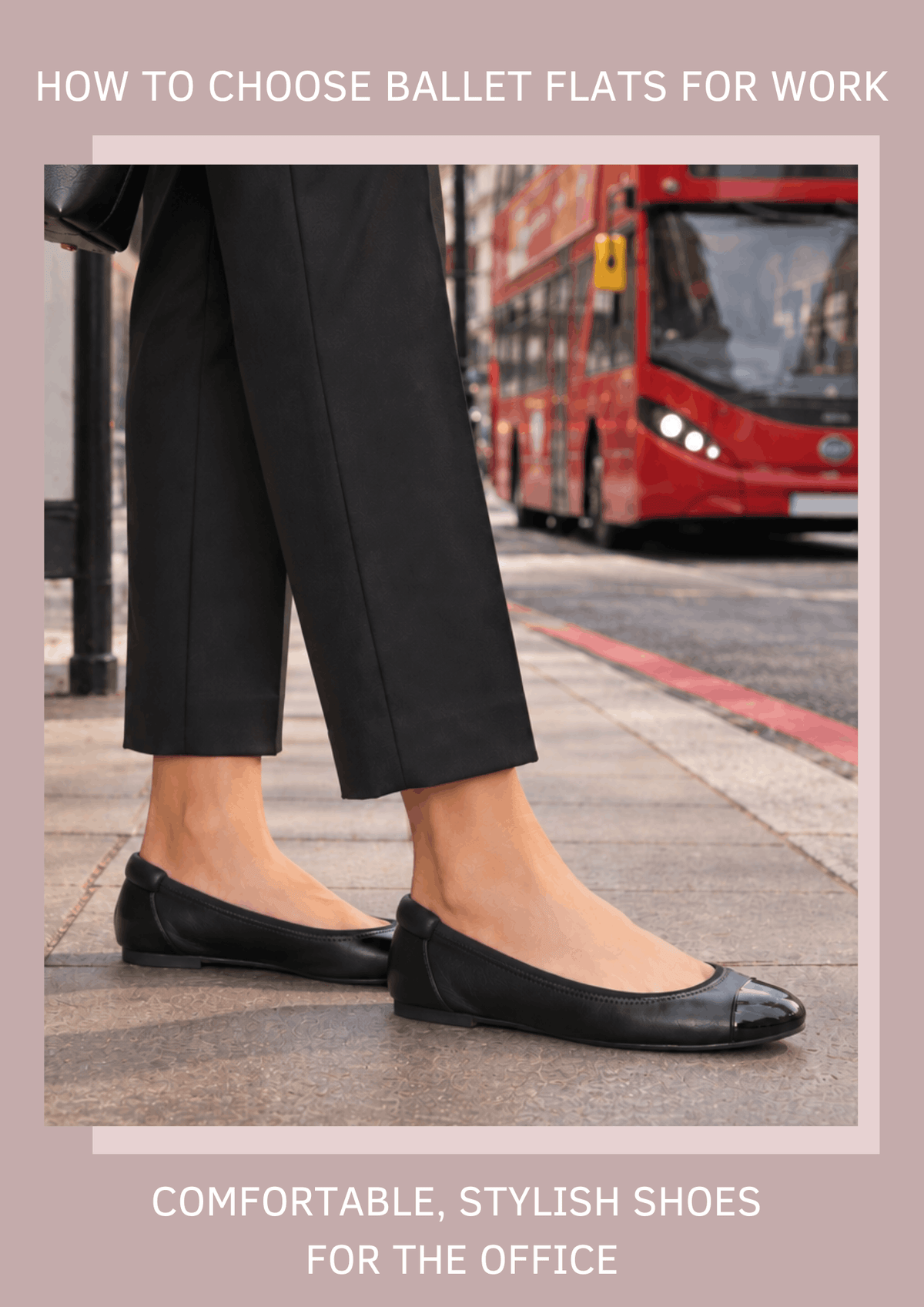
They can be an excellent choice for work, particularly when you need footwear that can move between commuting, sitting, standing, walking and evening plans. The most important consideration is whether the particular ballet flat remains comfortable throughout your working day.
Are ballet flats better than trainers for walking?
Neither is automatically better. Ballet flats and trainers are designed in many different ways, and the right choice depends on the type of walking, the construction of the individual shoe and your personal preferences. A fashion trainer designed for everyday wear is also very different from a trainer designed specifically for running or sport.
How can I make ballet flats more comfortable for walking?
Start with the fit and construction rather than relying on products added afterwards. The shoe should feel comfortable from the beginning, hold the foot securely without digging in and have enough flexibility and cushioning for the way you intend to wear it. If a ballet flat repeatedly causes rubbing or pressure, it is worth considering whether the underlying fit or construction is the real issue.
Ultimately, the best test is simple: choose a pair that feels comfortable when you first put it on and continues to feel good as your day unfolds.

Please leave a comment if you wish
This site is protected by hCaptcha and the hCaptcha Privacy Policy and Terms of Service apply.