
Article: How to Break In Leather Trainers (And Why You Shouldn’t Have To)
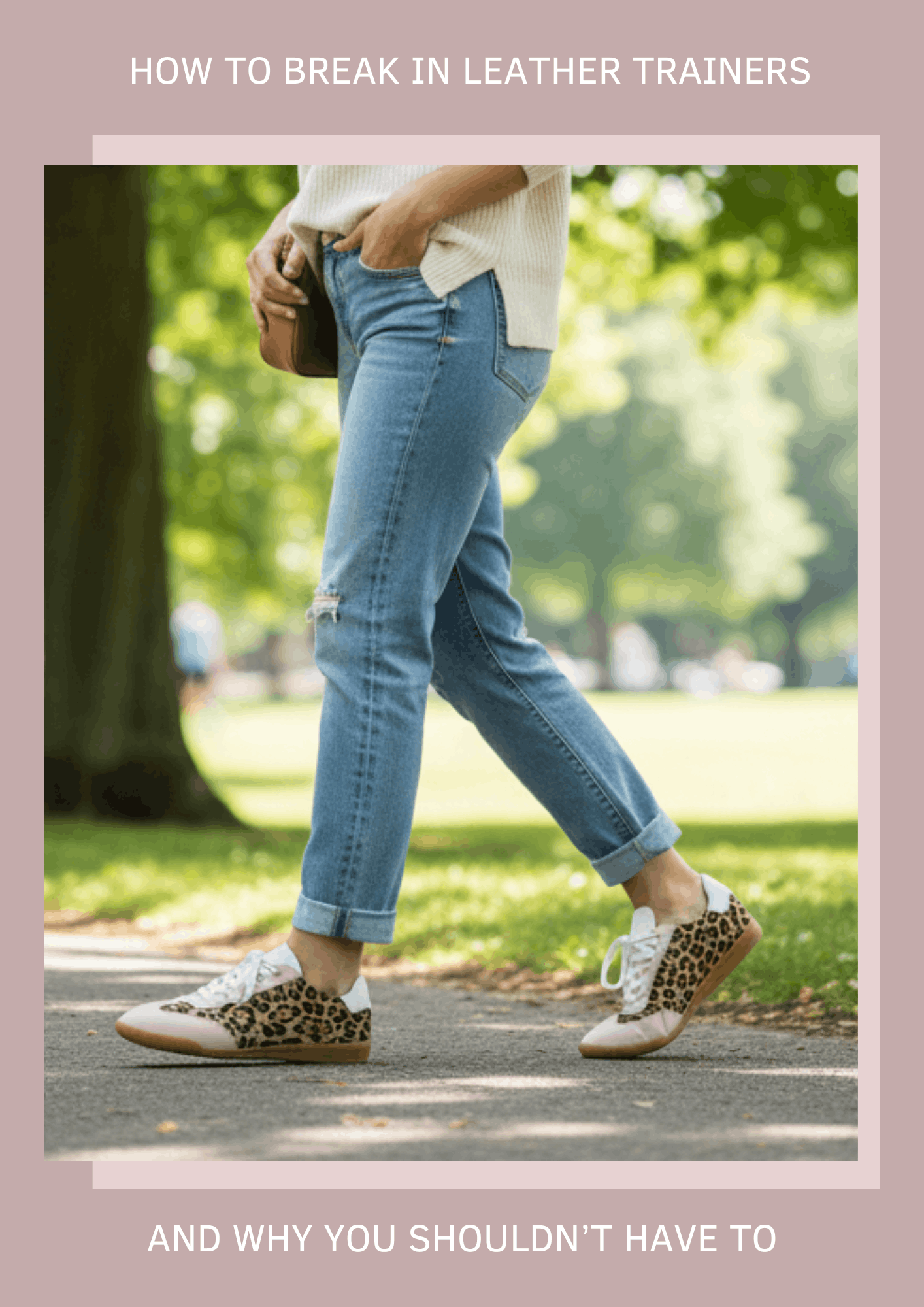
How to Break In Leather Trainers (And Why You Shouldn’t Have To)

Leather trainers are often described as needing to be “broken in”, as though sore feet, blisters and rubbing are simply part of the process. Many women are told to persevere, wear thicker socks, or wait for the leather to soften with time.
But the truth is this: well-designed leather trainers should not need breaking in at all.
While leather is a natural material that can adapt subtly to the foot over time, persistent discomfort is not a sign of a shoe settling. I’s a sign of poor fit, restrictive design or unsuitable materials. In this guide, we’ll explain why some leather trainers are said to need breaking in, why many shouldn’t, and how to recognise the difference so you can choose trainers that feel comfortable from the very first wear.
For a deeper understanding of fit, materials and long-term comfort, our Ultimate Guide to Women’s Leather Trainers: Style, Comfort, Fit & Care brings everything together in one place.
Why Leather Trainers Became Associated With “Breaking In”
The idea of breaking in leather footwear largely comes from traditional shoe construction. Historically, leather shoes were often made with stiff uppers, narrow toe boxes and limited internal cushioning. Over time, wear would soften the leather, but only after friction and pressure had already taken their toll on the feet.
In trainers, this expectation has lingered, even as footwear has evolved. You can read more about how women's footwear has undergone a fascinating transformation over the past two decades, echoing the changing priorities of comfort, fashion, and sustainability, in our article about the evolution of women's footwear.
Many modern leather trainers still prioritise aesthetics over anatomy, relying on rigid uppers or narrow silhouettes that don’t reflect how women’s feet actually behave throughout the day.
When this happens, the leather is forced to stretch unnaturally, particularly across the forefoot. What’s described as “breaking in” is often the foot adapting to the shoe, rather than the shoe supporting the foot.
Why Leather Trainers Shouldn’t Have To Hurt
A quality leather trainer should feel supportive and comfortable from the first wear. Leather may soften slightly over time, but it should never require pain as a prerequisite for comfort.
True comfort comes from how the entire shoe works in harmony with the foot. This includes adequate room for natural toe spread, sufficient depth through the forefoot, soft and flexible leather uppers, minimal internal seams around pressure points, and adjustable fastening that allows for daily changes in foot volume.
When these elements are present, the leather enhances the fit gradually rather than compensating for a restrictive design. If a trainer relies on weeks of wear to become tolerable, it’s usually masking a fundamental fit issue.
Why Cocorose Leather Trainers Don’t Need Breaking In
At Cocorose, we design leather trainers specifically so they don’t require a painful breaking-in period.
With nearly two decades of experience designing shoes for women, we’ve learned that comfort isn’t something you earn but rather, it’s something that should be built in from the start. Our trainers are shaped around real feet and real lives, informed by customer feedback, wear testing and a deep understanding of how women move throughout the day.
This is why many women tell us their Cocorose trainers feel comfortable straight out of the box. Soft, high-quality leathers are chosen for flexibility rather than stiffness, toe boxes are shaped to allow natural movement and internal construction is kept smooth and forgiving around sensitive areas.
Styles such as our Hoxton trainers are frequently chosen by women who have struggled with rigid or narrow trainers in the past and are looking for everyday comfort they can rely on, whether that’s for commuting, travel or long days on their feet.
When Leather Trainers Might Change Slightly Over Time
It’s important to distinguish between gentle adaptation and genuine discomfort.
Even when a trainer fits well, leather can soften and stretch with wear. This may result in a shoe feeling slightly more supple after several uses, particularly across flex points such as the forefoot. However, this should never involve sharp pressure, pinching or ongoing rubbing.
If a trainer causes blisters, numbness or soreness that worsens with wear, it’s unlikely to improve meaningfully over time. In these cases, no amount of “breaking in” will resolve the underlying issue.
The Role of Width and Toe Box Shape
One of the most common reasons leather trainers are said to need breaking in is insufficient width or volume at the forefoot. When toes are compressed, leather is forced to stretch unnaturally, leading to friction and pressure points.
Foot width is not just about measurements but instead, it’s about how the shoe accommodates natural toe splay, swelling and movement throughout the day. This is particularly important for women with wider feet, bunions or sensitivity across the forefoot.
If you suspect width may be affecting your comfort, our guide to Leather Trainers for Wide Feet & Bunions explains why toe box shape and internal volume often matter more than labelled width sizes.
You may also find it helpful to read How to Measure Foot Width at Home (And Why Measuring Foot Width Isn’t as Simple as You Think), which explains why traditional width measurements don’t always tell the full story.
Signs Your Leather Trainers Shouldn’t Be “Broken In”
If you’re unsure whether discomfort is temporary or a red flag, there are a few clear signs to watch for. Persistent rubbing, pressure over bunions, numb toes or pain that worsens rather than improves are all indicators that the trainer isn’t right for your foot.
A well-fitting leather trainer should feel supportive, balanced and wearable from the first outing. Trust your instincts, because discomfort is not something to ignore.
Choosing Leather Trainers That Work From Day One
The idea that leather trainers must be painful before they become comfortable is outdated. Leather should enhance fit over time; not compensate for poor design.
When choosing leather trainers, look beyond cushioning alone and consider how the shoe supports your foot as a whole. Materials, construction, shape and adjustability all play a role in long-term comfort.
If you’re looking for trainers you can trust from the very first step, our Ultimate Guide to Women’s Leather Trainers: Style, Comfort, Fit & Care offers a complete overview of what to look for and how to invest in trainers that truly support your feet.


Please leave a comment if you wish
This site is protected by hCaptcha and the hCaptcha Privacy Policy and Terms of Service apply.