
Article: Are White Trainers Still in Fashion for Work?
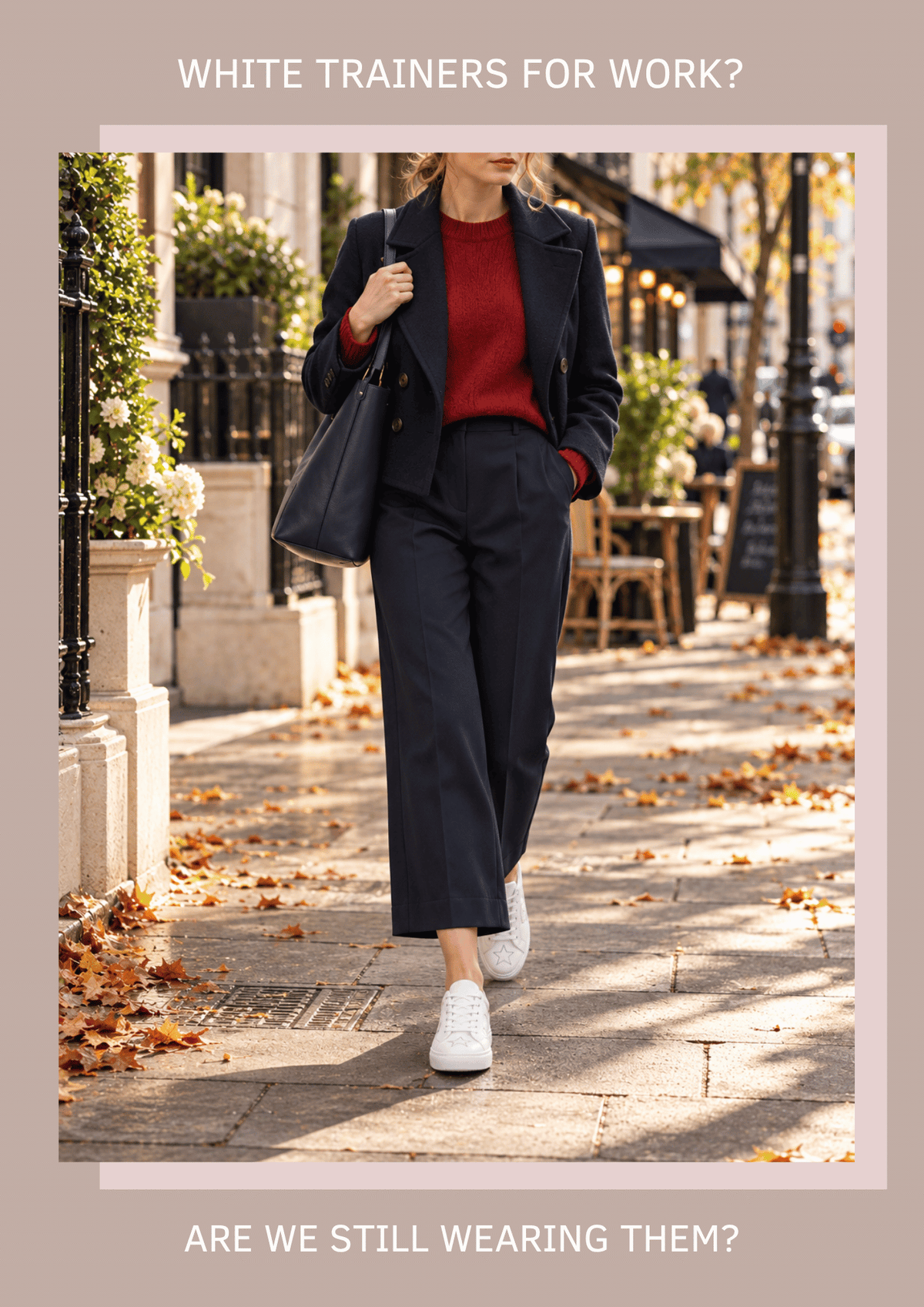
Are White Trainers Still in Fashion for Work?
A woman recently turned to Reddit with a familiar dilemma. Her white trainers had finally worn out after three years, and she was looking for a replacement she could wear to work. She wanted something that would work with straight leg jeans in a young professional office, but also stand up to days involving 10,000 steps. Comfort and support mattered, but so did finding a pair that still felt fashionable.
With loafers and other more formal styles returning to the fashion conversation, she posed the question, "are white trainers still a good choice for the office, or have we all moved on?"
The simple answer is yes, we absolutely are still wearing white trainers for work. A clean, streamlined pair of white leather trainers remains a relevant choice for many smart casual workplaces. The key is choosing a style that works with your office dress code, your wardrobe and the practical demands of your day.
How white trainers became part of workwear
There was a time when trainers were largely associated with sport, weekends and casual dressing. For many workplaces, they would have been considered too informal. That distinction has softened considerably as office dress codes have evolved and everyday wardrobes have become more flexible.
Today, trainers are worn with tailored trousers, straight leg jeans, midi skirts and dresses. A simple white leather design can sit comfortably alongside a blazer and smart trousers, bringing a relaxed note to an otherwise considered outfit. It can also work with the more casual combinations many women wear for commuting and everyday office life.
The appeal lies partly in versatility. White trainers are easy to combine with different colours and fabrics, and their understated appearance makes them less visually dominant than some of the more technical or brightly coloured styles available.
That does not mean every trainer belongs in every office. A creative workplace may welcome a wider range of styles, while a more formal environment may have specific expectations about footwear. But within a smart casual dress code, white leather trainers continue to be a practical and contemporary option.
Are white trainers still fashionable in 2026?
Yes. White trainers remain a fashionable and familiar part of contemporary dressing. Fashion trends may influence the details that attract attention, from slimmer retro inspired shapes to more substantial soles and distinctive finishes, but the classic white leather trainer has not disappeared.
Recent fashion coverage continues to feature white trainers alongside seasonal footwear trends. British Vogue's guide to the best white trainers reflects the enduring appeal of this wardrobe staple, while its coverage of trainer trends for 2026 explores how silhouettes and details continue to evolve.
The distinction worth making is between a particular style being especially fashionable at a given moment and a whole category of footwear becoming irrelevant. Trainers are not one single look. Their shapes, materials and proportions vary considerably, which is part of what allows them to adapt to different wardrobes and occasions.
A classic white leather trainer, such as the Cocorose London Hoxton style, creates a very different impression from a bulky running shoe, even though both fall under the trainer category.
For work, that distinction matters. A pared back leather design can look understated with tailored clothing, while a technical running shoe may feel better suited to exercise or a more relaxed setting. Neither is inherently right or wrong; they simply serve different purposes.
The office question: does the dress code still matter?
Before choosing white trainers for work, it is worth considering the expectations of your workplace. Smart casual can mean different things in different offices, so context matters more than any universal rule about what is fashionable.
In a relaxed office, white trainers may work naturally with jeans, knitwear and a blazer. In a more formal setting, tailored trousers, a shirt and a pair of clean leather trainers may strike the right balance, provided trainers are permitted. If your workplace expects formal business attire, it is sensible to check the dress code rather than assume every style will be suitable.
The design itself makes a difference, too. A simple upper, a considered silhouette and a clean finish can make a trainer feel more appropriate for work than a highly technical sports shoe. Keeping white trainers clean also helps maintain that understated appearance.
There is no need to dress identically to everyone else to look professional. The aim is to find a shoe that feels appropriate to your environment while still reflecting your own style.
Comfort matters when your working day involves 10,000 steps
For many women, the working day begins well before they reach their desk. There may be a school drop-off, a walk to the station and then a further walk to the office. Then, there could also be a commute across town and chores to do at lunchtime before a journey back home at the end of the day. Others spend much of their working time standing or moving between meetings, shops or different locations.
That is why comfort deserves to be part of the decision, and not an afterthought. A shoe may look good when you first put it on, but it also needs to suit the amount of walking you do and the shape of your feet.
Fit is especially important. Your heel should feel secure, your toes should have enough room and the shoe should not pinch across the forefoot. Consider how the shoe feels when walking, rather than judging it only while standing still. If you regularly spend long periods on your feet, the construction, flexibility and support of the shoe deserve careful attention.
If you spend much of your day on your feet, our guide to why leather trainers can be a comfortable choice for all day wear explores the relationship between materials, fit and everyday comfort.
Of course, no style of footwear can guarantee comfort for everyone. Feet differ, and what works well for one person may not suit another. The right choice is the pair that fits properly and feels comfortable for your own routine.
Why I still want my everyday shoes to look stylish
As the founder of Cocorose London, I have spent almost 20 years thinking about the relationship between footwear, comfort and the way women live. One thing I have never wanted to accept is the idea that practical shoes must look frumpy, or that choosing something fashionable means sacrificing comfort.
I, too, walk an average of 10,000 steps a day, so the question of what to wear is not simply about how a shoe looks. I need footwear that works for the reality of my day. But I also want to feel stylish. I do not want to choose a shoe that feels dated or that I would not enjoy wearing with my clothes.
For me, the ideal shoe brings those two things together. I do not want to choose between looking stylish and being comfortable, particularly when I spend so much time on my feet.
I have written more about this connection in Why Comfortable Shoes Make You Walk Further, exploring how the right footwear can influence our willingness to keep moving.
This is also why I think it is worth looking beyond the idea that a shoe must be fashionable in the narrowest sense to be a good choice. Trends can be interesting and inspiring, but the shoes we rely on need to work in everyday life, too. For those who see me regularly, they will tell you the same thing; I am always wearing my Cocorose trainers.
A classic white leather trainer for the working day
A white leather trainer offers a useful balance between a relaxed shoe and something more formal. Its clean appearance works with many of the pieces already in a working wardrobe, from straight leg jeans and knitwear to tailored trousers and a blazer.
The Cocorose London Hoxton is a classic white leather trainer designed for everyday wear. Its understated silhouette makes it a natural option for smart casual dressing, without the overtly technical appearance of a running shoe.
When choosing a pair for work, think about how you will wear it across the week. Will it work with the trousers and jeans you already own? Is it suitable for your commute as well as the office? Does it feel comfortable on the kind of day you actually have, rather than an idealised version of it?
If you are considering a new pair, our Ultimate Guide to Women's Leather Trainers: Style, Comfort, Fit & Care explores the details worth considering when choosing leather trainers, from fit and comfort to materials and care.
You can also explore the Cocorose London women's trainer collection to find a style that suits your wardrobe and everyday routine.
White trainers, loafers or ballet flats?
White trainers are not the only option for work, and they do not need to be. Loafers offer a more structured look and can work particularly well with tailoring. Ballet flats bring a lighter, more feminine silhouette and are an option for women who want a flat shoe that feels a little more dressed up.
In recent seasons, ballet flats have also returned to the fashion spotlight, although many women never actually stopped wearing them. At Cocorose London, we have continued to design ballet flats because we know that a shoe can remain useful and loved even when fashion attention moves elsewhere.
The best choice depends on your dress code, your personal style and what your day involves. You might prefer loafers for meetings, ballet flats for certain outfits and trainers for a long commute or a day that involves plenty of walking. There is room for all three.
Comfort and practicality matter, too. Many women spend long days commuting, walking, travelling or moving between different responsibilities. Their shoes need to work for those realities, not simply look right in a photograph.
Of course, not every trainer is equally comfortable, just as not every loafer is uncomfortable. Fit, construction, materials and the individual shape of your feet all matter. The important thing is to choose footwear that suits both your style and the way you intend to wear it.
You do not need to commit to one type of shoe for every working day. The most useful wardrobe is one that gives you options, so you can choose what feels right for the occasion without feeling that you have fallen behind a trend.
So, are we still wearing white trainers for work?
Yes. White trainers are still a relevant choice for work in 2026, particularly in offices where smart casual dressing is accepted. A streamlined white leather pair can work beautifully with tailored trousers, straight leg jeans and other everyday staples, while offering a practical alternative to more formal footwear.
The important thing is to choose carefully. Consider your workplace dress code, the style of the trainer, the fit and how much walking your day involves. A clean, classic leather design is very different from a technical running shoe, and that distinction can make all the difference to how an outfit comes together.
Fashion will continue to move between trainers, loafers, ballet flats and other styles. We can enjoy those shifts without feeling obliged to replace the shoes that already work for us.
If white trainers suit your wardrobe, your workplace and your daily routine, there is no reason to move on simply because another shoe is having a moment. Remember, the classic white leather trainer is classic for a reason - and they never go out of fashion.


Please leave a comment if you wish
This site is protected by hCaptcha and the hCaptcha Privacy Policy and Terms of Service apply.