
Article: How to Choose the Right Leather Trainers for Your Feet: Fit, Support & Comfort Explained
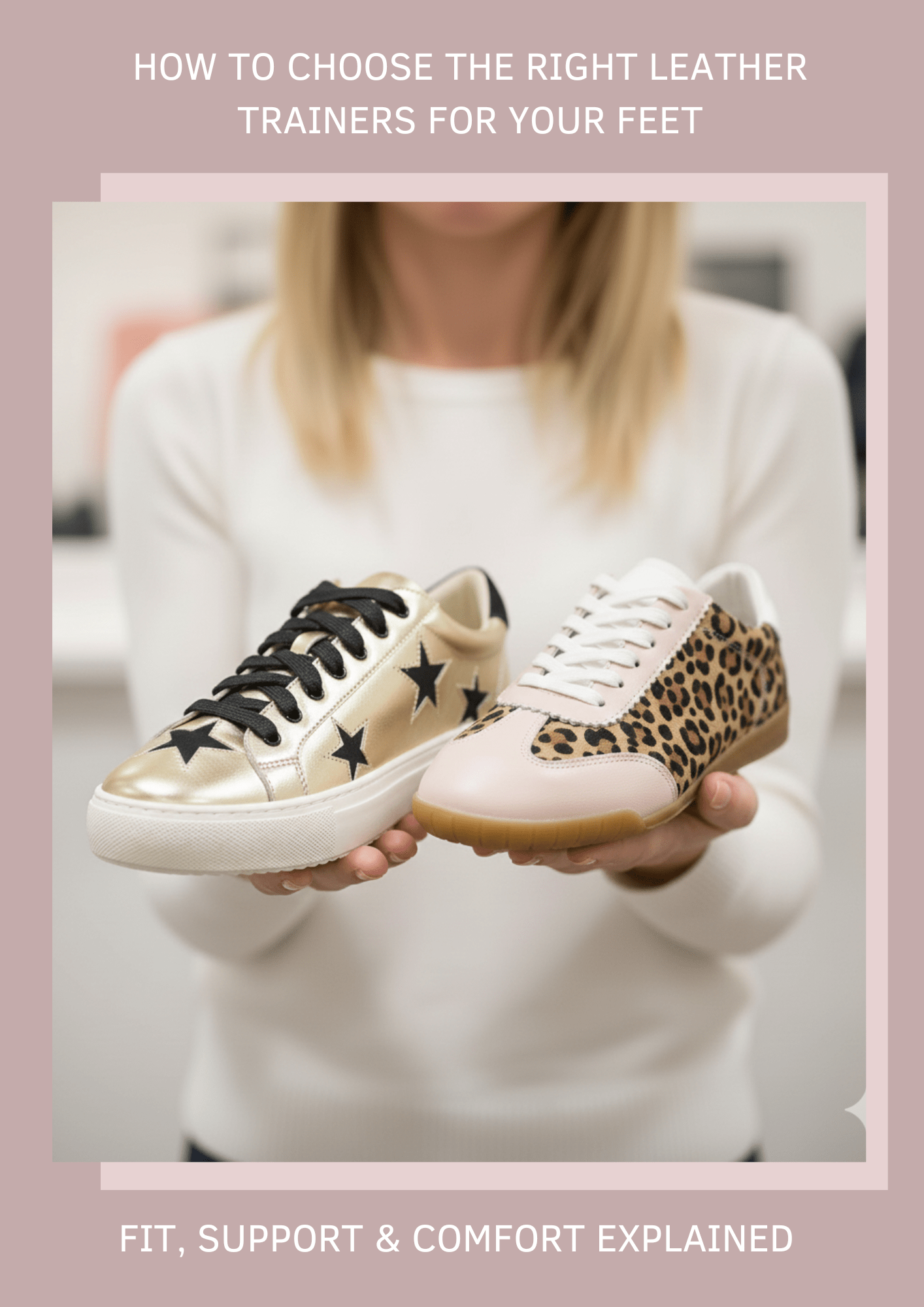
How to Choose the Right Leather Trainers for Your Feet: Fit, Support & Comfort Explained
Finding the perfect pair of leather trainers is about choosing a style you like and choosing a pair that feels good, supports your feet, and moves in harmony with the way you walk. With the right fit, leather trainers can relieve pressure, prevent common foot problems, and become one of the most comfortable pieces in your entire wardrobe.
But with so many shapes, materials and constructions available, the question remains: how do you actually choose the right leather trainers for your feet?
This guide breaks down everything that matters, including support, width, flexibility, cushioning, arch type and life-stage considerations, so you can invest in a pair that feels exceptional from day one and stays that way.
If you’re also interested in how to style leather trainers, care for them properly, and understand what makes one pair better designed than another, The Ultimate Guide to Women’s Leather Trainers: Style, Comfort, Fit & Care brings all of that expertise together in one place.
Why Fit Matters More Than You Think
Most women assume that trainers “break in” over time, and while this is true for leather softening, the foundational structure of a shoe never changes. If a trainer is uncomfortable the moment you put it on, no amount of walking will fix fundamental design issues.
A well-designed pair of leather trainers should feel comfortable as soon as you step into them. Natural leather adapts gently to your foot, but the shape, depth and support are built-in features, and not stretch mechanisms.
Good fit reduces:
-
rubbing and blisters
-
arch strain
-
forefoot compression
-
heel slippage
-
calf and Achilles tension
In short, the right fit improves the way your whole body feels.
Start With the Leather: Softness, Flexibility & Structure
The quality, softness and thickness of the leather directly impact how the trainer feels.
Soft Leather = Instant Comfort
Premium, naturally supple leather moulds to your foot without causing pressure points.
Stiff or coated leathers, and anything synthetic, can feel rigid, hot and prone to cracking.
Cocorose trainers use soft, pliable leathers that wrap the foot rather than restrict it, making an essential difference for long-term wear.
Looking after soft leather properly is just as important, and our guide on how to clean and care for leather trainers explains how to keep them comfortable and looking their best over time.
Structure Matters
A good trainer needs a balance of softness and structure for support. A completely floppy trainer collapses, but one that’s too rigid fights your foot.
Look for:
-
a flexible forefoot
-
a structured heel counter
-
a supportive midsole
These three components determine how comfortably your foot moves through each step.
Understanding Width & Toe Shape
Many comfort issues come from width, not length.
Do You Have a Wider Forefoot?
If you’ve experienced:
-
pinching
-
rubbing along the bunion area
-
tingling toes
your foot likely needs more width or a deeper toe box.
Leather trainers with a rounder, softly tapered toe shape give the toes room to splay naturally, which is essential for comfort and proper gait.
Narrow or Low-Volume Feet
If your feet are narrow, a gently sculpted silhouette supports the foot and prevents slipping.
If You’re Unsure
Try the standing test:
Your toes should lie flat, with space to wiggle, but your foot shouldn’t slide sideways when you walk.
Arch Support: Choose a Trainer That Works With Your Foot, Not Against It
Your arch type dramatically affects how your trainers should feel.
Neutral or Medium Arches
Look for gentle arch support, built-in cushioned midsoles and soft leather.
High Arches
Look for deeper arch-support cushioning and a gentle curve through the midfoot. Your arch needs support to prevent fatigue.
Flat Feet
Seek a stable heel counter, slight arch support (not too aggressive), and a midsole that supports alignment. Flat feet often need shoes that create structure without forcing the arch unnaturally.
Whatever arch type you have, if you use custom orthotics, removable insoles are a must. Cocorose trainers include these for easy swapping.
Heel Fit: The Most Overlooked Part of Comfort
A properly fitting trainer will:
-
hug your heel securely
-
prevent slipping
-
feel comfortable without rubbing
Leather heel counters soften and shape gently around your heel, offering support and stability that synthetic alternatives can’t replicate.
If a heel slips, it’s almost always a sign of wrong fit or shape — and not something that will “break in”.
Cushioning: What You Feel With Every Step
Good cushioning should feel:
-
deep
-
durable
-
responsive
-
consistent throughout the day
Memory foam is especially effective because it adapts to your movement yet retains its structure over time, unlike thinner foam layers that flatten within weeks.
In Cocorose trainers, the memory-foam insole and padded ankle collar work together to distribute pressure and soften impact, especially important for women with plantar fasciitis or heel pain.
Life-Stage Foot Changes: Pregnancy, Perimenopause & Menopause
Like the rest of your body, your feet are not static, and they change across your life.
Pregnancy
Many women experience:
-
swelling
-
flattening arches
-
increased width
Soft leather trainers with good depth and structure provide the adaptability needed during this stage. Deep cushioning is critical for comfort and joint health.
Perimenopause & Menopause
Hormonal changes can cause:
-
widening feet
-
joint sensitivity
-
reduced fat padding
-
changes in gait
A well-cushioned, gently structured leather trainer supports these shifts beautifully and is often recommended by podiatrists.
If your feet feel more sensitive, more swollen, or simply “different”, you’re not imagining it. Choosing soft, quality leather over synthetic becomes even more important during these phases.
We further explore hormonal swelling of feet and shoe fit, how perimenopause affects your feet and menopause and foot pain in our dedicated guides.
Common Foot Conditions & the Features You Need
If you live with any of the following, the right leather trainer can make a measurable difference:
Bunions:
Look for soft leather, a wider or deeper forefoot and a gently rounded toe shape.
Plantar fasciitis:
Seek strong heel support, cushioned insoles, and shock absorption.
High arches:
Look for curve in midfoot and cushioned insoles.
Flat feet:
Choose structured soles and supportive heel counters.
Morton’s neuroma:
Opt for more depth and a wider toe box to reduce nerve pressure.
Achilles tightness:
Avoid high or rigid heel collars; soft, padded leather is key.
How Should Leather Trainers Actually Fit?
Here’s your checklist for the perfect fit:
✔ Toes can wiggle comfortably
✔ Heel feels secure
✔ No pressing or pinching
✔ Foot sits naturally, without being forced
✔ No rubbing hotspots
✔ No sliding forward or sideways
✔ Feels comfortable on the first wear
Leather will soften, but the structure should feel right from the start.
When you’re juggling work, childcare, commuting and everything in between, footwear that feels right from the first step isn’t a luxury but a necessity, and something we explore more deeply in our article on modern motherhood, busy lifestyles and the invisible load women carry.
When to Size Up or Down
Size up if:
- toes touch the end
- you have swollen or wide feet
- you plan to add orthotics
Stay true to size if:
- the length is right, even if the leather feels slightly firm (it will soften)
- the fit feels balanced across the foot
Size down if the length is far too big and your foot is sliding around in the trainer.
The Right Trainer Makes Life Easier
Choosing the right leather trainers means choosing a pair that supports your lifestyle, your comfort and your long-term foot health. When the materials are soft, the structure supportive, and the fit truly right for your feet, trainers don’t just feel comfortable, but they become the shoes you rely on daily.
If you want to explore styling, care, foot health and more, you’ll find everything in The Ultimate Guide to Women’s Leather Trainers: Style, Comfort, Fit & Care, which expands on this article with even more expert insight and practical tips.


Please leave a comment if you wish
This site is protected by hCaptcha and the hCaptcha Privacy Policy and Terms of Service apply.