
Article: Are Barefoot Shoes Really Good For You?
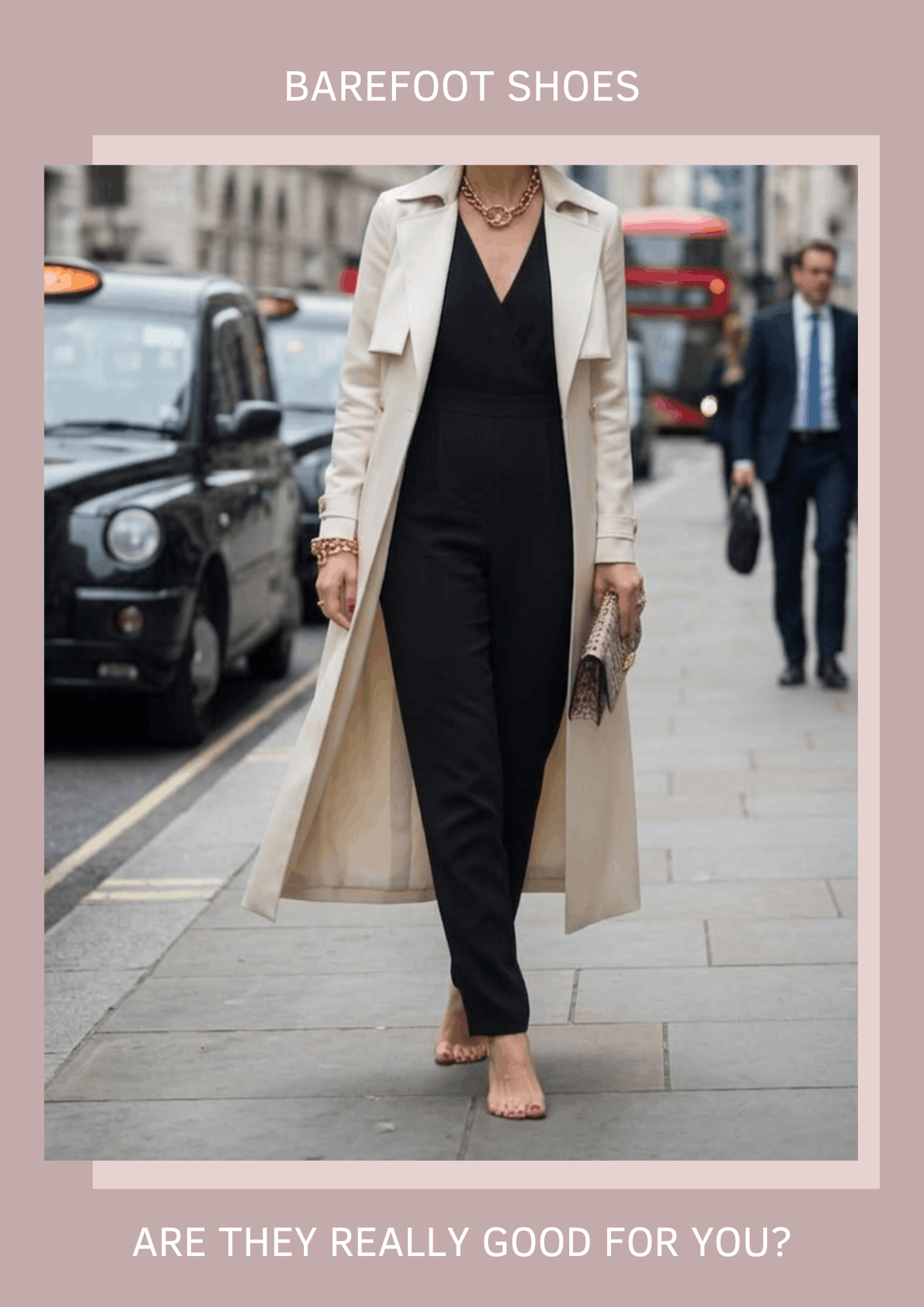
Are Barefoot Shoes Really Good For You?
Barefoot shoes are having a moment.
Once considered niche, they have rapidly moved into mainstream fashion and wellness conversations, appearing across social media, running communities and increasingly within fashion itself. Their promise is appealing, with more natural movement, stronger feet, better posture and a greater connection to the ground.
At first glance, the philosophy makes sense.
For decades, many women have worn shoes that restrict movement entirely. Narrow toe boxes, rigid soles, towering heels and unforgiving structures have often prioritised appearance over the natural behaviour of the foot. It is hardly surprising that a movement advocating freedom, flexibility and natural movement has gained traction.
And yet, like many trends, the conversation around barefoot shoes has become increasingly polarised.
Some advocate for completely barefoot or ultra minimal footwear as the answer to modern foot problems. Others warn about injury, lack of support and the risks of abandoning cushioning too quickly.
So where does the truth actually sit?
And perhaps more importantly, what does genuinely healthy footwear look like for women living busy lives?
Within our Ultimate Guide to Foldable Shoes, we explore how thoughtful footwear supports modern movement. The rise of barefoot shoes raises important questions about flexibility, comfort, cushioning and how shoes should interact with the body.
The reality, as many podiatrists and foot health specialists suggest, is far more layered than social media trends often imply.
What Are Barefoot Shoes?
Barefoot shoes, also referred to as minimalist shoes, are designed to mimic walking barefoot while still offering a degree of protection from the ground.
Typically, barefoot shoes include:
- Very thin soles
- Minimal cushioning
- Flexible construction
- Wide toe boxes
- Little or no heel elevation (known as zero drop)
The goal is to interfere as little as possible with the foot’s natural movement.
Supporters argue that modern footwear has weakened our feet over time, causing muscles to become dependent on cushioning and support structures rather than functioning naturally.
Some research does support aspects of this idea. Studies suggest minimalist footwear may help improve foot strength, balance and proprioception, which refers to the body’s awareness of movement and position.
There is logic in encouraging the foot to move more naturally, but that is not the same thing as saying all cushioning is bad.
The Problem With Extreme Thinking
One of the biggest issues within the barefoot shoe conversation is the idea that footwear must sit at one extreme or the other.
Either heavily structured and rigid, or completely stripped back and unsupported.
In reality, most foot health professionals argue for something more balanced.
Many podiatrists acknowledge the potential benefits of minimalist footwear while also warning that abrupt transitions can lead to stress fractures, Achilles strain, plantar fasciitis and overuse injuries.
The foot is complex and not all feet are the same.
Some people adapt well to barefoot shoes. Others do not.
Factors such as existing foot conditions, gait mechanics, joint health, age, muscle strength and lifestyle all influence how appropriate minimalist footwear may be.
This is where the conversation often becomes oversimplified online.
Because while natural movement matters, so does protection, shock absorption and comfort across long days spent on hard, urban surfaces.
What Barefoot Shoes Get Right
Despite the debate, the barefoot movement has highlighted several genuinely important ideas.
Feet Are Designed to Move
The foot contains an extraordinary network of muscles, tendons and joints. Restrictive footwear can absolutely interfere with natural movement patterns over time.
Flexible shoes that allow the foot to bend and respond naturally are often beneficial.
This is something we have believed at Cocorose since we started in 2007.
Long before barefoot shoes became what they are today, our foldable ballet flats were designed around softness, flexibility and movement. We intentionally deconstructed the ballet flat in order for it to move with the foot rather than fight against it.
Toe Space Matters
One area where many barefoot shoe advocates make a strong point is toe box shape.
Many traditional shoes compress the toes unnaturally, which may contribute to bunions, discomfort and pressure points over time.
A more natural forefoot shape often allows for better comfort and stability.
Heavy, Rigid Shoes Are Not Always Helpful
There is growing awareness that excessive rigidity can sometimes weaken movement patterns rather than support them.
Shoes that feel like armour are not necessarily healthier.
Again, balance matters.
Where Barefoot Shoes Can Become Problematic
The challenge begins when minimalism becomes too extreme.
Most people today do not spend their lives walking barefoot across soft, natural surfaces. We walk across hard pavements, concrete floors, train stations, airports and city streets.
Hard surfaces create repeated impact and as we know, impact matters because of the repercussions on our joints.
Many podiatrists caution that completely removing cushioning can overload bones, tendons and joints, particularly during transition periods.
This is particularly relevant for:
- Women already experiencing foot pain
- People with plantar fasciitis
- Those with bunions or joint sensitivity
- Individuals with flat feet or overpronation
- Anyone spending long hours standing or commuting
Minimalism may strengthen certain muscles, but cushioning also serves an important physiological role.
Shock absorption protects the body from repeated impact forces travelling upwards through the feet, knees and hips.
This is something we take very seriously at Cocorose.
Why Cushioning Is Not the Enemy
One of the most misleading ideas emerging from some corners of the barefoot movement is that cushioning automatically weakens the foot.
Thoughtful cushioning is not about immobilising movement, but it actually supports the body through repeated impact.
At Cocorose, our philosophy has never been about creating rigid, over engineered footwear. But neither has it been about stripping shoes back so aggressively that comfort and protection disappear entirely.
Our foldable ballet flats remain soft, lightweight and flexible. They move naturally with the foot. They are grounded and close to the floor, with a subtle yet effective heel height of approximately 8mm just on the outsole alone.
Very importantly, they are also pillowed and cushioned in all the right places.
Real life places demands on the body. Women commute, travel, stand for hours, walk across cities and attend weddings and events that stretch long into the evening.
Comfort is most definitely not weakness and thoughtful cushioning allows women to move more comfortably through the realities of modern life.
The Middle Ground: Natural Movement With Intelligent Comfort
Perhaps the healthiest approach sits somewhere between the two extremes.
Not rigid, restrictive footwear, but not aggressively minimal footwear either.
Instead:
- Flexible construction
- Soft materials
- Natural movement
- Thoughtful cushioning
- Lightweight design
- Close to ground feel
- Gentle support where needed
This is ultimately where Cocorose naturally sits.
Our shoes were never designed to force the foot into unnatural positions but equally, they were designed with the understanding that modern, urban life creates repetitive stress that benefits from intelligent comfort.
Why the Conversation Around Barefoot Shoes Matters
What the barefoot movement has done successfully is force the footwear industry to reconsider what comfort and foot health actually mean.
That is positive.
Women are becoming more aware of how shoes interact with their bodies. They are questioning rigid structures, painful designs and narrow fits that have long been normalised within fashion.
That awareness is long overdue, but the answer is unlikely to be found at either extreme.
The healthiest footwear is rarely about trends, but about considerately designed and crafted footwear that supports your lifestyle.
What Women Actually Need From Shoes
Most women are not looking to become barefoot runners.
They simply want shoes that:
- Feel comfortable across long days
- Move naturally with the foot
- Do not create pressure or pain
- Look beautiful
- Support modern lifestyles
That is a very different conversation and it is one that Cocorose has been at the forefront of since the very beginning. Our focus has always been on designing lightweight, flexible footwear intended to support movement rather than restrict it.
We've never believed that comfort has to come at the expense of cushioning, softness or elegance.
A More Thoughtful Future for Footwear
Perhaps the most useful thing about the barefoot shoe trend is the conversation they have started.
This matters enormously and it revolves around how footwear should feel, how they should move and how they should support the body rather than simply decorate it.
True comfort rarely exists at extremes.
The future of footwear is unlikely to be completely barefoot, nor heavily structured and rigid. It will sit somewhere more thoughtful and in between.
Flexible. Lightweight. Soft. Grounded. Cushioned where needed. Designed for real life.
And in many ways, that is exactly what Cocorose has always stood for.


Please leave a comment if you wish
This site is protected by hCaptcha and the hCaptcha Privacy Policy and Terms of Service apply.