
Article: Are Ballet Flats Professional Enough for Work?
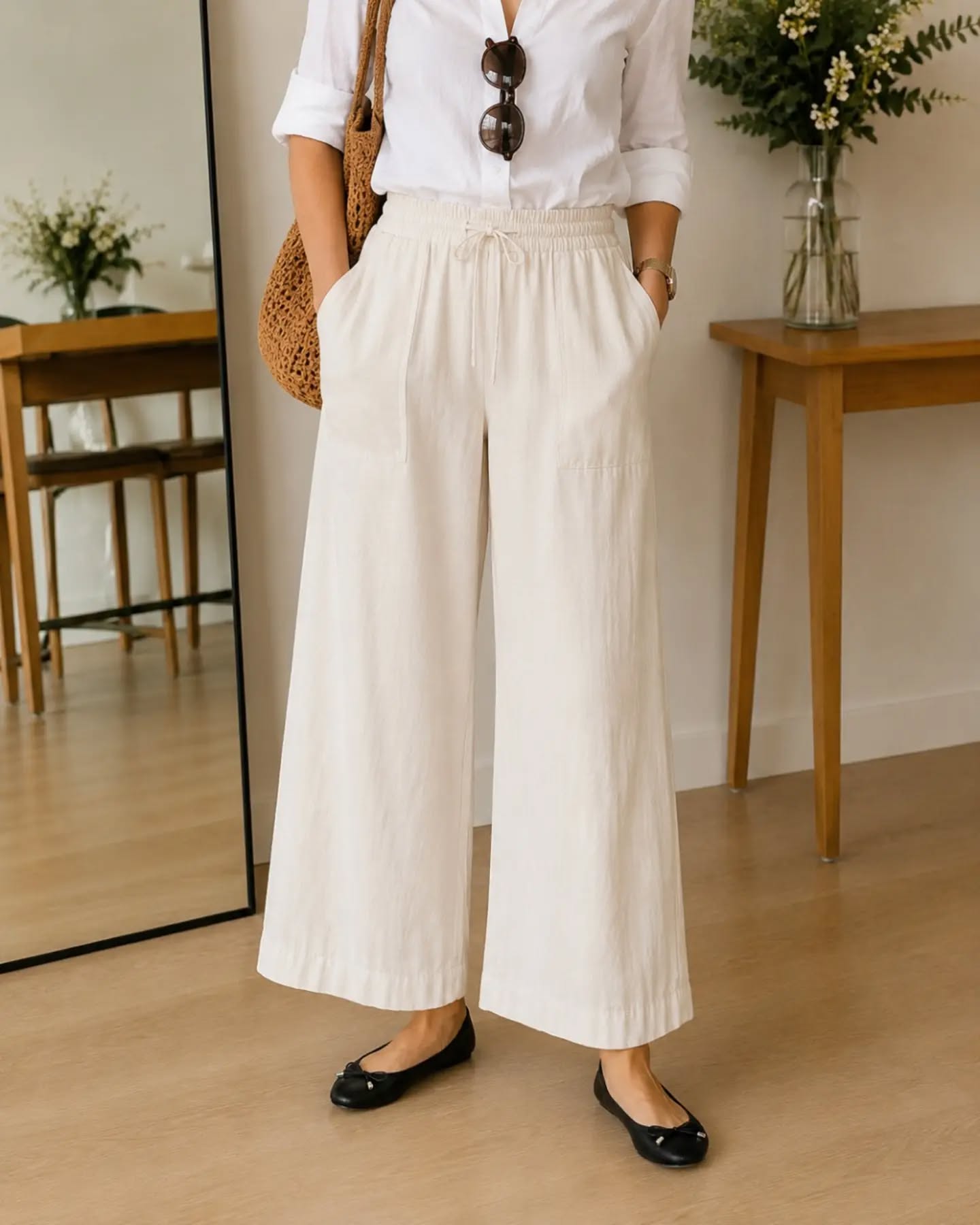
Are Ballet Flats Professional Enough for Work?
Yes. Ballet flats are absolutely professional enough for work. In most workplaces in the UK, a woman does not need to wear heels anymore to look serious, ambitious or polished. Even writing this as we move toward the end of the decade seems ridiculous. The real question is not whether the particular pair of ballet flats is smart enough for the occasion, fits properly, gives you the comfort you need and is suitable for what you are asking your feet to do throughout the day.
I have invested more than 18 years, through Cocorose London, designing and selling ballet flats and watched attitudes to women's work footwear change considerably. We have seen the workplace move from a time when heels were an expectation to one where trainers, loafers and ballet flats are all perfectly acceptable choices.
Our experience has taught us something quite simple: professional footwear does not have to be uncomfortable footwear.
From heels at work to flats at work
When I first started my working life, there was a very different expectation around women's footwear.
I remember women wearing heels to work, to interviews and to client meetings. I was one of those women. If you had a job interview for an office role, you would always where footwear with a heel. If you had a client-facing role and did not know when a client might arrive, you could find yourself wearing those heels for most of the day.
Today, things feel very different.
The change did not happen overnight, but the rise of trainers in everyday fashion played a significant part. One fashion moment that stands out was Karl Lagerfeld's Chanel autumn/winter 2014 ready-to-wear show, staged as a supermarket at Paris's Grand Palais. Models walked through the supermarket wearing classic Chanel cuts and wearing trainers on their feet. This was also a time when we started seeing a push back of heels on the Red Carpet, with A list actors arriving in flats rather than heels.
That shift in fashion reflected something happening in everyday life too. Less formal footwear (which was the heel for women) became accepted as part of smart, fashionable outfits, including outfits worn to work.
Ballet flats had already given women an alternative to heels of course. But the workplace has changed enough that today, in many professional settings, a woman can choose a ballet flat simply because she prefers it - and that is a significant difference.
Does your profession matter?
Does your job influence whether ballet flats are professional enough for you at work? In my experience, no not really.
A ballet flat can work in a corporate office, an accountancy firm, a law firm, a creative business, education, healthcare, retail or many other working environments.
What changes is not necessarily whether a ballet flat is professional, it is what you are asking your feet and the shoe you wear to work to do.
Someone working at a desk in a corporate office might spend much of the day sitting down, while if you working in education you could be on your feet for hours. Working in healthcare may require walking continuously. Someone who's job is in retail or hospitality could spend most of their working day standing.
That is where the choice of ballet pump becomes much more important.
If you are going to walk to work, stand for long periods, walk between meetings and then go out for dinner afterwards, you need a ballet flat that can cope with that day.
Your feet do not care whether your job title says accountant, teacher, designer or director. They care whether your shoes fit properly.
What makes a ballet flat look professional?
There are some features I would look for regarding what makes a ballet flat look more professional.
1. Choose a good-quality material
Personally, I think a leather ballet flat generally looks more professional. I believe you can identify quickly when a ballet flat is made of a lower-quality synthetic material.
That is my preference rather than a rule.
There are excellent non-leather materials available, and a good synthetic ballet flat can certainly look smart. Suede can look exceptionally polished too, although for a working shoe I tend to prefer leather. What matters just as much is how well the shoe is looked after. A well-made leather shoe that's dirty, scuffed and neglected is going to look less professional than a well-maintained shoe made from another material.
2. Think about the toe shape
Pointed, almond, round and structured square toes can all work.
Personally, I like an almond or rounded toe for a professional ballet flat because it gives the foot room while retaining a clean appearance.
A pointed toe can look particularly smart with tailored trousers or a suit or a pair of jeans for that matter.
The important thing is that the shape works with your foot rather than forcing your toes into an uncomfortable position.
3. Keep decoration intentional
A simple bow is absolutely fine. A little detail can give a ballet flat personality and make it feel very much part of your outfit rather than an afterthought.
I would be more cautious with excessive hardware, oversized branding or details that make the shoe look flimsy. Again though, context matters.
There is nothing wrong with choosing a more distinctive ballet flat if this express your personal style and who you are.
4. Look after your shoes
This sounds obvious, but it is often overlooked. Professional appearance is partly about the condition of your footwear. Clean leather, properly maintained uppers, outsoles that are not falling apart, no excessive scuffing and a shoe that still holds its shape.
The same applies to your clothes doesn't it. A well cut suit will not look particularly professional if it is creased and certainly not if it's stained. The same principle applies to your footwear.
Comfort matters more than many women realise
There is a practical reason I think ballet flats work so well for professional life. If your feet hurt, you think about your feet.
That sounds trivial, but it is not. If we need to think about pain in our feet, caused by ill-fitting or unsuitable footwear, it impact us portraying a professional persona.
If you are in a meeting, or giving a presentation, or sitting an interview, or teaching a class or dealing with customers, the last thing you need is to be distracted by shoes that are rubbing, slipping or squeezing your toes.
I have worn shoes for work that looked absolutely fantastic and were agony beofre lunch. They were the wrong shoes for the day. That is a lesson I have carried with me ever since. The best work shoe is one that allows you to forget about your feet and concentrate on what you need to get done.
Look for cushioning underneath the heel and the ball of the foot. Look for a sole with some substance and flexibility rather than an extremely thin piece of material between your foot and the pavement.
Fit is just as important.
At Cocorose London, our gently elasticated topline is one of the features we have continued to use for many years. It helps the upper gently hug the foot rather than relying on the toes to grip the shoe. That matters. If a ballet flat is slipping off at the back you can find yourself unconsciously scrunching your toes to keep it on. That is not a good way to spend a working day and very bad for your feet's health.
There is another point that is easy to overlook. Your feet change during the day. Feet naturally swell during the day, and heat can make this more noticeable.
That is one reason why fit matters so much if you intend to wear ballet flats from morning until evening. Any shoe that feels perfect for five minutes in your hallway may feel very different after eight or ten hours.
For a working shoe, I want enough room in the toe box for my toes to lie naturally and I want my heel to stay securely in place without digging into the Achilles. I want cushioning where the foot takes the most impact.
So when you buy a pair of ballet flats for work, don't just ask “Will these look good in the office?” you should be thinking “Will these still feel good at 8pm?” That is a much better question.
Which Cocorose ballet flats work particularly well for work?
If I had to choose two Cocorose styles for professional wear, I would choose the Piccadilly and Harrow.
The Piccadilly ballerina has a smart, quilted appearance that works particularly well in black, tan's or a nude tone. A distinctive toe cap and it has the elasticated topline. It is the comfort construction that we have developed over many years.
The Harrow ballerina is another strong choice if you want a little more height. It has a concealed wedge heel, giving you some lift while retaining the appearance of a ballet flat. A toe cap and the elasticated top line again.
For women who want a style that is a little less classic the Clapham woven leather style can work beautifully with office clothing. The woven leather gives the shoe flexibility and texture without making it feel overly casual.
You can see our wider guide to choosing ballet flats here: What Are The Best Ballet Flats? How to style ballet flats for work
The great thing about ballet flats is their versatility.
They look excellent with cropped trousers, they work with skirts and dresses and look particularly good with a T-shirt under a blazer or with a preppy shirt. I have always liked the classic 1960s references too, thinking about Audrey Hepburn or Brigitte Bardot: simple clothes, cigarette trousers, a beautiful ballet flat and a very confident silhouette. Furthermore you certainly don't need to make every professional outfit matched with footwear that is black, navy and beige. A red ballet flat can work, so can pastel pink flat with glitter toe, and metallics colourways can certainly work. Express yourself, and your shoes are a very easy way to add personality. Take a look at our whole collection of leather flats here.
What should I look for when buying ballet flats for work?
If you are looking for a pair of ballet flats to carry you through commuting, meetings and a full working day, this is the checklist I would use.
1. Comfort and structural support
• A good outsole: Avoid extremely thin soles that give you no protection on hard floors and pavements.
• Arch support or space for your own insole: If you need additional arch support, choose a shoe that can accommodate an appropriate insole.
• A cushioned footbed: Look for proper padding under the areas of the foot that take the most pressure.
• Some heel or internal lift: A small heel or concealed wedge, is better for foot health and comfort.
• Heel cushioning: Soft padding around the Achilles makes a considerable difference over a long day.
2. Material and durability
• Leather or good-quality alternatives: Leather that is breathable, soft and able to mould to the foot.
• Woven leather: This can give a very flexible upper and is particularly useful if your feet swell during the day.
• Good-quality lining: The inside of the shoe matters just as much as the outside.
• Breathability: Your feet spend a long time inside your shoes, choose materials that allow them to breathe.
3. A professional aesthetic
• Choose your toe shape: Pointed, almond, round and structured square toes can all work.
• Keep decoration considered: A bow or small detail will look beautifully polished. Excessive decoration can move the shoe into a more evening look.
• Choose the colour for your workplace: Black and nude are easy starting points, but there is no reason to avoid colour.
• Look after them: Clean, well-maintained shoes always look more professional.
4. Fit and sizing
• No heel slippage: Your heel should stay securely in the shoe without painful pressure against your Achilles.
• Enough toe-box room: Your toes should lie naturally, not being squeezed together.
• Do not rely on your toes to hold the shoe on: If the shoe slips, look for a better-fitting shape or an elasticated topline.
• Try shoes later in the day: Feet can swell naturally, so an afternoon fitting can give you a better idea of how the shoe will feel after several hours.
I have written a guide on how to choose the best ballet flats please have a read of my guide and let me know your thoughts.
So, are ballet flats professional enough for work?
Yes. A woman wearing ballet flats is NOT less serious, less ambitious or less professional than a woman wearing heels, or any other shoes for that matter. Perhaps not wellington boots!
What matters far more is the person wearing them, the way she carries herself, the quality and condition of what she is wearing, and whether the footwear is appropriate for the demands of her day.
There will always be individual workplaces with particular dress codes. If your employer specifically requires a certain type of footwear, that obviously needs to be respected.
But where you have a choice, there is no reason why a well-made ballet flat would prevent you from looking highly professional.
In fact, I would argue that being comfortable can help you be more professional. If you are not thinking about your feet, you can concentrate on the meeting, work to get sorted or an interview with full confidence.
Frequently Asked Questions about ballet flats for work
Can you wear ballet flats to a job interview?
Yes. A clean, well-made and smart ballet flat can be entirely appropriate for a job interview. Choose a pair that fits your outfit and the culture of the organisation. Black, nude, navy and other understated colours are easy choices, though a more creative workplace may give you much more freedom.
Are ballet flats too casual for an office?
Ballerina flats are not to casual for the office. The quality, design and condition of the ballet flat matter more than the fact that it is flat. A well-made leather ballet flat can look extremely polished with trousers, a skirt, dress or suit.
Are leather ballet flats more professional?
Leather often has a particularly polished appearance and can age well when cared for properly. It is not a requirement, though. Good-quality non-leather materials can look smart too.
Can I wear ballet flats with a suit?
Absolutely. A ballet flat can soften the formality of a suit while keeping the outfit polished. An almond or pointed toe can work particularly well with tailored trousers.
Can you wear ballet flats all day at work?
You can, provided the particular shoe is suitable for your feet and the amount of walking or standing involved. Look for cushioning, a secure fit, a comfortable toe box, suitable sole construction and, if needed, arch support or room for your own insole.
Can ballet flats be worn for commuting?
Yes. In fact, commuting was one of the reasons Cocorose London created its original foldable ballet flat in 2007. The ability to walk comfortably to and from work is one of the reasons a good pair of ballet flats can be so useful.
Can I wear colourful ballet flats to work?
Yes, if your workplace allows it. Red, pink, metallic and other colours can work beautifully with professional clothing. Your footwear does not have to be invisible to be professional.
What's most important thing when choosing ballet flats for work?
Fit and comfort. A beautiful ballet flat that hurts your feet is not a good work shoe. Look for a secure heel, enough room for your toes, suitable cushioning, breathable materials and construction that matches the amount of walking and standing you do.
Other Articles to read:
- Step into style leather ballet flats for work, weekend and everything inbetween
- Blog on why comfortable shoes make you walk further looking at ballet flats and trainers
- As the creator of the UK's first foldable shoe, I have written a detailed guide to foldable shoes for women.



Please leave a comment if you wish
This site is protected by hCaptcha and the hCaptcha Privacy Policy and Terms of Service apply.